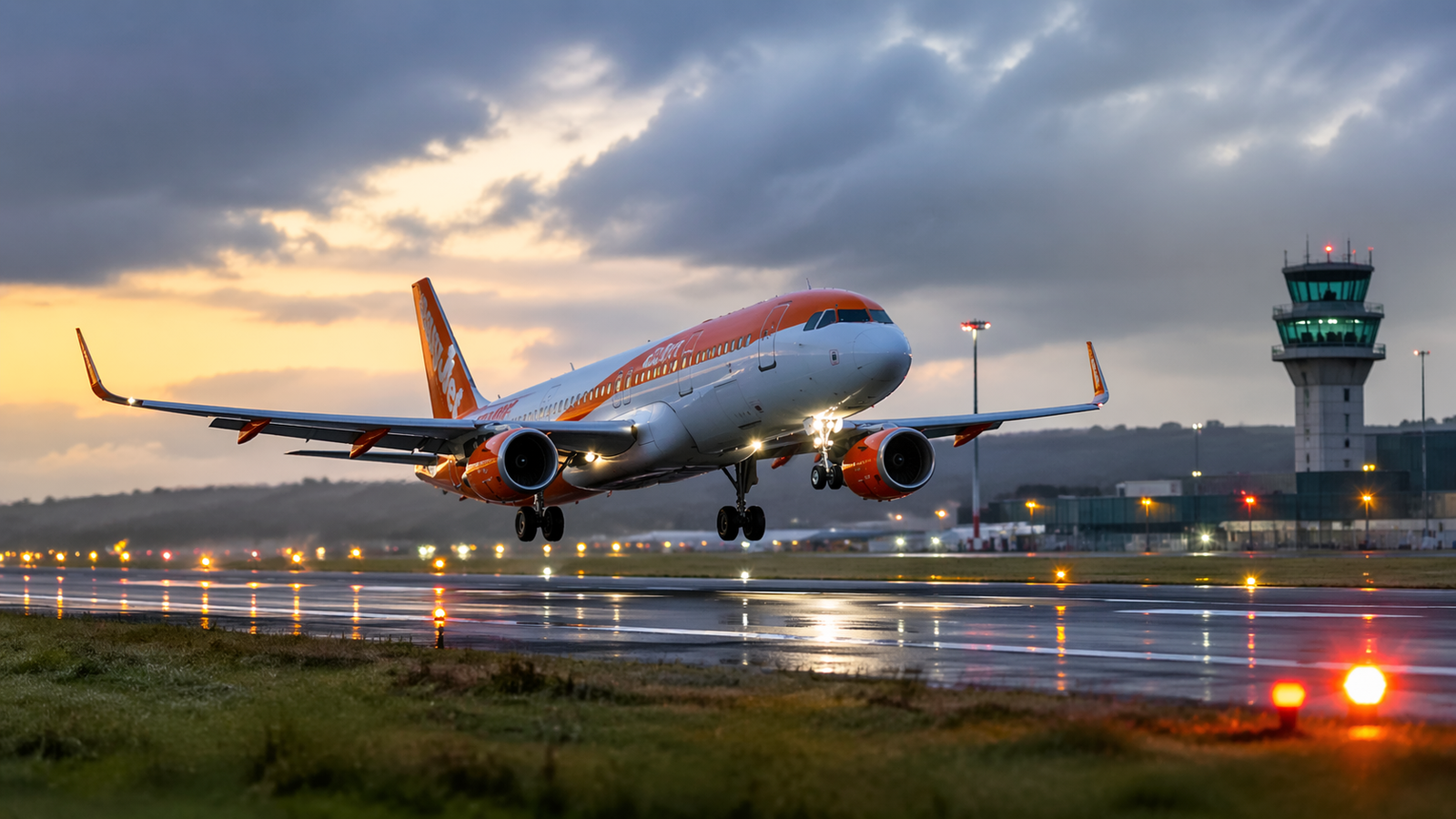
The incident involving easyjet flight u2238 emergency landing newcastle captured widespread attention across aviation observers, passengers, and safety analysts, not because of a catastrophic failure, but due to how modern aviation systems respond to unexpected in-flight situations. Commercial aviation operates within a framework where even minor irregularities are treated with seriousness, and this event serves as a strong example of how precautionary decisions define airline safety culture. The diversion to Newcastle was not a random occurrence but a calculated operational choice influenced by multiple real-time variables including passenger safety, aircraft status, and geographic positioning. Understanding the depth of such an event requires examining not just what happened, but how aviation protocols, crew training, and decision-making processes align under pressure.
In modern airline operations, an emergency landing does not automatically imply danger in the dramatic sense often perceived by the public. Instead, it reflects a structured response to a situation that requires immediate attention beyond what can be managed in the air. The easyjet flight u2238 emergency landing newcastle highlights how pilots are trained to prioritize safety above schedule, cost, or convenience. The decision to divert is never taken lightly; it involves coordination between cockpit crew, airline operations control, and air traffic management systems. Newcastle Airport, in this case, represented the safest and most efficient option available within reach at that moment. This choice demonstrates how aviation infrastructure across regions plays a crucial role in supporting emergency responses, ensuring that aircraft can land quickly wherever necessary.
Understanding Emergency Diversions in Commercial Aviation
Emergency diversions form a critical component of aviation safety systems. When analyzing easyjet flight u2238 emergency landing newcastle, it is essential to understand that diversions are governed by strict protocols designed to minimize risk under uncertain conditions. Pilots undergo extensive training to identify when a situation crosses the threshold from routine irregularity to potential emergency. This threshold is influenced by factors such as passenger health issues, technical alerts, weather complications, or operational anomalies. Once that threshold is reached, the primary objective becomes securing a safe landing at the nearest suitable airport, even if it disrupts the planned route.
The aviation industry categorizes emergencies into different levels, ranging from precautionary diversions to full-scale distress situations. In the context of easyjet flight u2238 emergency landing newcastle, the response aligns more closely with a precautionary emergency, where immediate landing is required but the aircraft remains under control. Such scenarios often involve the activation of standardized communication protocols, including emergency transponder signals and priority clearance from air traffic control. These systems ensure that the aircraft receives uninterrupted guidance and rapid access to runway facilities upon arrival. The coordination between the flight crew and ground authorities during such events reflects the highly integrated nature of global aviation safety networks.
Timeline and Operational Response
The sequence of events surrounding easyjet flight u2238 emergency landing newcastle demonstrates how quickly decisions are made in aviation environments. After departure from its origin, the flight progressed normally until an onboard situation required immediate attention. At that point, the cockpit crew assessed the severity of the issue and initiated communication with air traffic control. This step is critical, as it establishes the aircraft’s priority status and allows controllers to begin preparing for a potential diversion. The selection of Newcastle as the diversion airport was likely based on proximity, runway availability, and the presence of necessary emergency services.
As the aircraft altered its course, ground operations at Newcastle Airport would have been alerted in advance. Emergency services, including medical teams and airport fire units, are typically placed on standby whenever an aircraft declares an emergency. This preparation ensures that any required assistance is immediately available upon landing. The safe touchdown of the aircraft marked the culmination of a well-executed response, demonstrating the effectiveness of established aviation procedures. Following the landing, the situation onboard was addressed, and once resolved, the aircraft was able to continue its journey. This seamless transition from emergency response to normal operations highlights the resilience of airline systems in managing unexpected events.
Passenger Safety and Crew Training
One of the most important aspects of easyjet flight u2238 emergency landing newcastle is the role of crew training in ensuring passenger safety. Airline pilots undergo rigorous training programs that simulate a wide range of emergency scenarios, preparing them to respond effectively under pressure. These simulations include medical emergencies, system failures, and complex decision-making exercises. Cabin crew members are also trained extensively in first aid, emergency communication, and passenger management, enabling them to maintain order and provide assistance during critical moments.
Passenger safety is always the top priority, and every action taken during an emergency is guided by this principle. In situations like easyjet flight u2238 emergency landing newcastle, passengers may not always be fully aware of the details behind the diversion, but the calm and controlled environment maintained by the crew plays a crucial role in preventing panic. Communication is carefully managed to provide reassurance without causing unnecessary alarm. This balance reflects the professionalism of airline staff and their ability to handle high-pressure situations with composure. The successful outcome of such incidents reinforces the importance of continuous training and adherence to safety protocols.
Aircraft Systems and Safety Mechanisms
Modern commercial aircraft are equipped with advanced systems designed to detect and respond to potential issues in real time. The context of easyjet flight u2238 emergency landing newcastle highlights how these systems contribute to early identification of problems, allowing crews to take preventive action before a situation escalates. From onboard diagnostics to automated alerts, aircraft technology provides pilots with critical information that supports decision-making during flight. These systems are continuously monitored, ensuring that any irregularity is immediately flagged for attention.
In addition to onboard technology, aircraft are supported by extensive maintenance programs that ensure their reliability. Airlines adhere to strict regulatory standards, conducting regular inspections and servicing to maintain operational safety. The fact that easyjet flight u2238 emergency landing newcastle concluded without major incident reflects the effectiveness of these safety measures. Even when unexpected situations arise, the combination of advanced technology and disciplined maintenance practices ensures that risks are minimized. This layered approach to safety is a defining characteristic of modern aviation, contributing to its status as one of the safest modes of transportation.
Role of Air Traffic Control and Ground Coordination
Air traffic control plays a vital role in managing emergencies such as easyjet flight u2238 emergency landing newcastle. Once an aircraft declares an emergency, controllers prioritize its movement within the airspace, clearing other traffic if necessary to provide a direct path to the chosen airport. This coordination requires precise communication and situational awareness, as controllers must balance the needs of multiple aircraft while ensuring the safe passage of the one in distress. The efficiency of this system is critical in reducing response time and facilitating a smooth landing.
Ground coordination is equally important, involving multiple departments within the airport infrastructure. From runway preparation to emergency response teams, every element is activated in a coordinated manner. Newcastle Airport’s ability to handle the situation effectively demonstrates the readiness of regional airports to respond to emergencies. This capability is not limited to major international hubs but extends across the aviation network, ensuring that aircraft have access to support wherever they may need to land. The success of easyjet flight u2238 emergency landing newcastle underscores the importance of this widespread preparedness.
Public Perception and Media Attention
Incidents like easyjet flight u2238 emergency landing newcastle often attract significant public and media attention, sometimes leading to misunderstandings about the nature of aviation emergencies. The term “emergency landing” can evoke images of severe danger, but in many cases, it reflects a precautionary measure taken to ensure safety. Media coverage may emphasize dramatic aspects of the event, but a deeper analysis reveals the routine nature of such responses within the aviation industry. Understanding this distinction is important for maintaining public confidence in air travel.
Public perception is influenced not only by the event itself but also by how information is communicated. Airlines typically provide official statements that focus on passenger safety and operational outcomes, avoiding speculation about causes until all facts are verified. In the case of easyjet flight u2238 emergency landing newcastle, the emphasis remained on the safe handling of the situation and the well-being of those onboard. This approach aligns with industry standards, ensuring that accurate information is shared while maintaining transparency and accountability.
Aviation Safety Culture and Continuous Improvement
The broader significance of easyjet flight u2238 emergency landing newcastle lies in its contribution to the ongoing evolution of aviation safety. Every incident, regardless of severity, is analyzed in detail to identify potential improvements in procedures, training, or technology. This continuous feedback loop is a cornerstone of aviation safety culture, enabling the industry to learn from each event and enhance its practices. Investigations focus not only on what went wrong but also on what went right, reinforcing successful strategies and addressing any identified gaps.
Safety culture extends beyond individual airlines to encompass regulatory bodies, manufacturers, and international organizations. Collaboration across these entities ensures that lessons learned are shared globally, contributing to the overall advancement of aviation safety. The handling of easyjet flight u2238 emergency landing newcastle reflects the maturity of this system, where even routine diversions are treated as opportunities for improvement. This commitment to learning and adaptation is what allows aviation to maintain its high safety standards despite the complexities of modern air travel.
Conclusion
The event known as easyjet flight u2238 emergency landing newcastle serves as a clear example of how the aviation industry manages unexpected situations with precision and professionalism. Far from being an indication of failure, the emergency landing represents the successful application of safety protocols designed to protect passengers and crew. From the initial decision to divert to the coordinated response on the ground, every step of the process reflects the strength of aviation systems and the dedication of those who operate them.
By examining the details of easyjet flight u2238 emergency landing newcastle, it becomes evident that safety in aviation is not a static achievement but a dynamic process driven by continuous improvement. The incident highlights the importance of training, technology, communication, and collaboration in ensuring that air travel remains secure. As the industry continues to evolve, events like this reinforce the principles that define modern aviation, demonstrating that preparedness and proactive decision-making are the keys to maintaining safety in the skies.