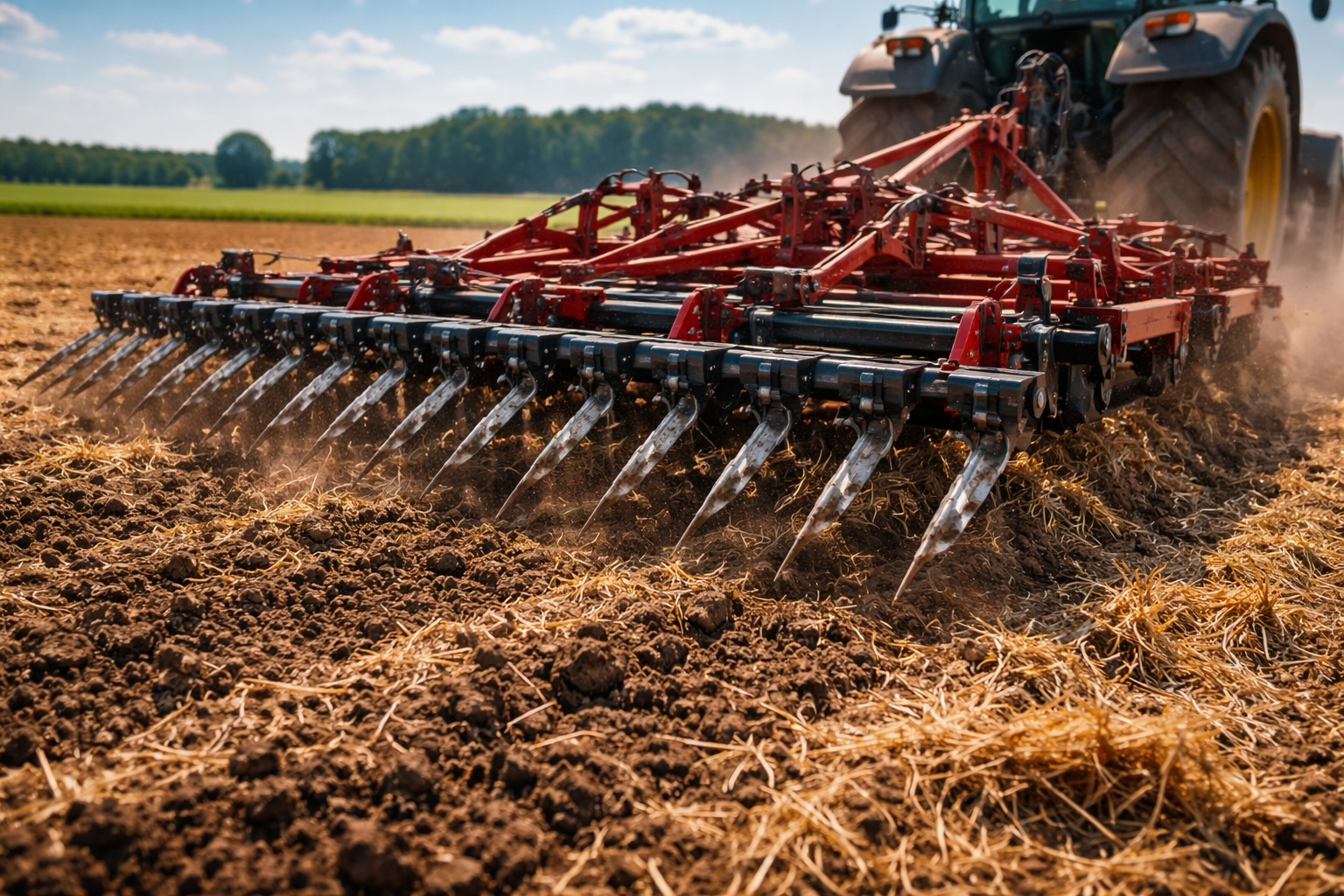
Messeregge is a term that holds a distinctive place within agricultural practice, representing a tool that has quietly shaped the way soil is prepared and maintained. While it may not be widely recognized outside farming and land management communities, its importance becomes clear when examining how fields are cultivated with precision and care. The idea behind messeregge is closely tied to efficient soil treatment, where the upper layer of the land is managed in a controlled manner to support plant growth without causing unnecessary disturbance to deeper layers. This approach aligns with evolving agricultural needs, where productivity must be balanced with sustainability and long-term soil health.
The development of messeregge reflects a shift away from aggressive soil manipulation toward more refined techniques. Traditional methods often relied on heavy plowing that turned over large sections of earth, disrupting natural structures and sometimes leading to erosion or nutrient loss. Messeregge, by contrast, is designed to work closer to the surface, gently cutting through soil and plant residues while maintaining stability below. This makes it especially useful in farming systems that prioritize conservation and efficiency. As agricultural practices continue to adapt to environmental challenges, tools like messeregge are gaining attention for their ability to support both yield and sustainability.
Structure and Functional Design of Messeregge
The physical design of messeregge is one of its defining features, combining simplicity with effectiveness. It typically consists of a framework fitted with sharp blades or cutting elements that interact with the soil in a horizontal motion. These blades are carefully arranged to ensure even coverage across the field, allowing the tool to slice through the top layer of soil and break up compacted surfaces. The precision of this design enables farmers to achieve a smooth and uniform seedbed, which is crucial for consistent crop emergence and growth.
What makes messeregge particularly effective is the balance it achieves between strength and subtlety. The blades are robust enough to handle tough soil conditions, including areas with crop residues or light compaction, yet they operate in a way that avoids deep penetration. This ensures that beneficial microorganisms and soil structures remain largely undisturbed. The design also allows for adaptability, as different configurations can be used depending on soil type, moisture level, and farming objectives. This versatility has contributed to its continued relevance in modern agricultural systems.
Agricultural Applications and Practical Use
Messeregge is widely used in various stages of field preparation, particularly in seedbed formation and residue management. After harvesting, fields often contain leftover plant material that needs to be managed before the next planting cycle. Messeregge helps by cutting and distributing this material evenly across the surface, allowing it to decompose naturally and contribute to soil fertility. This process not only improves the physical condition of the soil but also enhances its nutrient content over time.
In addition to residue management, messeregge plays a significant role in weed control. By slicing through the upper soil layer, it disrupts the growth of unwanted plants without the need for excessive chemical intervention. This method is especially valuable in sustainable farming systems where reducing chemical inputs is a priority. Farmers can use messeregge to maintain cleaner fields while preserving the natural balance of the soil ecosystem. Its ability to perform multiple functions in a single pass also contributes to time and cost efficiency, making it a practical choice for both small-scale and large-scale operations.
Advantages of Using Messeregge in Soil Management
One of the key benefits of messeregge lies in its ability to improve soil structure while minimizing disruption. By focusing on the surface layer, it prevents the deep inversion of soil that can lead to erosion and loss of organic matter. This approach helps maintain the integrity of the soil profile, allowing roots to develop more naturally and access nutrients more effectively. Over time, this can lead to healthier crops and more stable yields.
Another advantage is the reduction of fuel and labor requirements. Because messeregge operates efficiently and often replaces multiple traditional processes, farmers can complete field preparation with fewer passes. This not only saves time but also reduces the overall environmental impact of farming activities. The combination of efficiency and sustainability makes messeregge an attractive option in a world where agricultural practices are under increasing scrutiny for their ecological footprint.
Messeregge in Sustainable Farming Practices
The growing emphasis on sustainable agriculture has brought tools like messeregge into greater focus. As farmers seek methods that protect soil health and reduce environmental impact, the principles behind messeregge align well with these goals. Its ability to manage soil gently while maintaining productivity supports practices such as conservation tillage and organic farming. These approaches rely on preserving soil life and structure, both of which are supported by the use of messeregge.
In sustainable systems, maintaining a balance between intervention and preservation is essential. Messeregge contributes to this balance by offering a method of soil preparation that avoids excessive disturbance. It allows farmers to address immediate needs, such as weed control and residue management, without compromising long-term soil health. This makes it a valuable component of farming strategies that aim to be both productive and environmentally responsible.
Technological Evolution and Modern Adaptations
As agricultural technology continues to advance, messeregge has also evolved to meet new demands. Modern versions of this tool may include adjustable settings, improved materials, and compatibility with advanced machinery. These enhancements allow for greater precision and efficiency, enabling farmers to tailor their approach to specific field conditions. The integration of technology has not changed the fundamental purpose of messeregge but has expanded its capabilities.
The adaptability of messeregge ensures that it remains relevant in a rapidly changing agricultural landscape. Whether used in traditional settings or alongside cutting-edge equipment, it continues to provide a reliable method for soil preparation. This combination of tradition and innovation highlights its enduring value and underscores its role in shaping modern farming practices.
Economic and Environmental Impact of Messeregge
The use of messeregge has both economic and environmental implications that contribute to its growing importance. From an economic perspective, it offers a cost-effective solution for field preparation by reducing the need for multiple tools and operations. Farmers can achieve desired results with fewer resources, which is particularly beneficial in regions where input costs are a major concern. The efficiency of messeregge translates into savings that can be reinvested into other aspects of farm management.
Environmentally, the benefits are equally significant. By minimizing soil disturbance, messeregge helps reduce erosion and preserve organic matter, both of which are critical for maintaining soil fertility. It also supports the retention of moisture, which can improve crop resilience in areas prone to drought. These advantages make messeregge a valuable tool in efforts to create more sustainable and resilient agricultural systems.
Future Prospects of Messeregge in Agriculture
Looking ahead, the role of messeregge is likely to expand as farmers continue to seek solutions that balance productivity with sustainability. Advances in technology and a deeper understanding of soil science will further enhance its effectiveness. As agricultural practices evolve, tools that offer precision and efficiency without compromising environmental integrity will become increasingly important, and messeregge fits this profile well.
The future of agriculture depends on the ability to adapt to changing conditions while preserving essential resources. Messeregge represents a step in this direction, providing a method of soil management that aligns with both current needs and future goals. Its continued development and application will play a part in shaping the next generation of farming practices, ensuring that agriculture remains both productive and sustainable for years to come.